Tuesday, May 1, 2012

Koninginnedag


Koninginnedag, otherwise known as Queen’s Day, is a national holiday in the Netherlands. April 30th, the official celebration of Queen Beatrix’s birthday, is actually the birthday of her mother Queen Julianna. Got all that, or should I back up?

Queen Beatrix

The holiday was first observed on August 31, 1885 as Prinsessedag (Princess’s Day), the fifth birthday of Princess Wilhelmina, heiress to the Dutch throne. When she became queen, the name changed, as did her title.

Queen Wilhelmina 

When her daughter Julianna became queen in 1948, the day of celebration was moved to 30 April, her actual birthday. In 1980 when Beatrix ascended to the throne, she decided not to change the date to her birthday (31 January) but to establish a more permanent legacy in honor of her mother—thus 30 April it remains.

Queen Julianna

Except for the fact that the weather in January would put the kibosh on the street party, people in Holland wouldn’t care which day it is because most of the ones I saw won’t remember it anyway! Actually I should say that the night before Queen’s Day is the most likely to cause a blackout. Wild drunken street parties are the norm all over Holland.


When in Rome...

This year 30 April was beautiful. No exaggeration—it was the most beautiful day since I arrived in January. It was warm and sunny, and perfect for the kind of party the Dutch have come to expect. 


You name it, it was there

Koninginnedag features a remarkable phenomenon: a country-wide yard sale. No kidding, virtually everyone attempts to sell his or her junk right on the sidewalk. I like to think of it as trading one’s stuff for that of others, as many, especially children, spend as much as they earn.


You had to see it to believe it!

The streets are full. The canals are full. The air is full—full of sound, pot smoke, cooking smells, screams, horns, blaring techno music, and mostly laughter.


I found one fake queen...

The trams did not run in the city center for one very good reason—they can’t. Think of the wildest, most crowded St. Patrick’s Day, carnival, Mardi Gras, whatever, and you still don’t have a clue what it’s like.
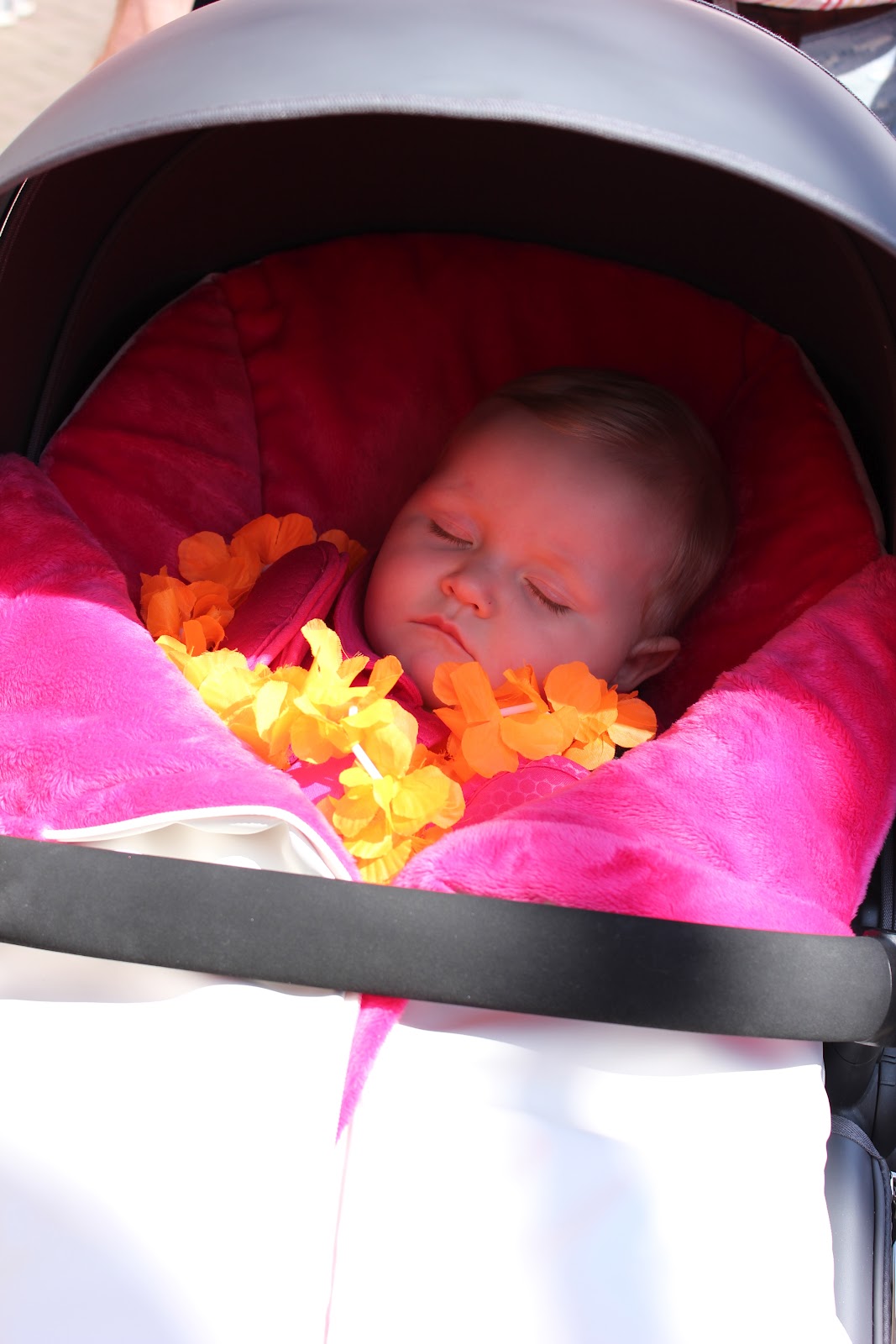

...and one true princess

Rembrandt Harmenszoon van Rijn


To say that Rembrandt van Rijn was a Dutch painter seems to me like saying that Babe Ruth played a little ball or Columbus liked to sail. For me, Rembrandt isn’t just a Dutch painter; he is the Dutch painter.


Rembrandt van Rijn (1606-1669)

Born in Leiden in 1606, Rembrandt was apprenticed at an early age to Leiden history painter Jacob van Swanenburgh, followed by a short apprenticeship with Pieter Lastman in Amsterdam, which is where he opened a studio in 1624 with his good friend and colleague, Jan Lievens. By age 21 Rembrandt was accepting students.


Portrait of Rembrandt by Jan Lievens, 1628

As they say, one thing leads to another and by 1629 Rembrandt was discovered by statesman, Constantijn Huygens (father of renowned Dutch mathematician and physicist, Christaan Huygens). Huygens introduced Rembrandt’s remarkable talent for portraiture to Prince Hendrik, who continued to purchase from Rembrandt until 1646.


Portrait of Saskia van Rijn by Rembrandt,  1633

In 1639 Rembrandt and his wife, Saskia moved to Jodenstraat 4, which is now the location of the Rembrandthuis Museum—one of the most popular tourist destinations in Amsterdam.


Het Rembrandthuis

Apparently Rembrandt’s spending habits exceeded his income because in 1656, bankruptcy led to the sale of his house and possessions. Through meticulous inventories (kept by Rembrandt) and countless paintings, drawings, and etchings we know with certainty what domestic life in the 1600's entailed.


Printmaker at the Rembrandthuis Museum

Opened as a museum in 1911, the Rembrandthuis collection of original works produced or once owned by Rembrandt steadily grew. In the 1990’s the adjacent properties were procured and an extension to the museum was added (replete with public entrance, gift shop etc.). In addition to the collection of drawings, etchings, and copper plates by Rembrandt the museum also owns works by his teachers, pupils, and contemporaries hung much as they would have been in his lifetime.


The master's artifacts for copy and study

Like I said, for me Rembrandt is the preeminent artist of the 17th century. In a letter written to statesman and benefactor, Constantijn Huygens, Rembrandt offered the only surviving explanation of his artistic ambition: (to achieve) de meeste en de natuurlijkste beweegelijkheid (the greatest and most natural movement). This expression is open to interpretation, and here’s the one I prefer: (to achieve) the greatest and most natural “motive” (meaning internal emotion and external movement).

When I see his pictures, I know his subjects. I know Rembrandt.


He gave the world approximately 3,000 works of art including 600 paintings of which 55 are self-portraits. Because of these (and unlike most of his contemporaries) we know exactly how he looked from an early age until he died in 1669. It is in these portraits that “beweegelijkheid” is revealed.

No one could paint emotion (motive) like Rembrandt—absolutely no one.


Sunday, April 22, 2012

The Dutch Resistance Museum


On May 10, 1940 Germany invaded the Netherlands. Within one week after being thoroughly overrun by the blitzkeig (lightning war) of the Nazi invasion, the Dutch army capitulated. Few would argue the wisdom of this decision considering the predictable consequences of resisting. The Dutch Resistance Museum in Amsterdam tells the story of Dutch resistance until the fall of the Third Reich.


Collecting dogs for use in minefield detection (Bonnekamp Collection)

The museum addresses one central inquiry: How did Dutch people respond to Nazi occupation? “Resistance” must not be confused with “response.” Response to such an overwhelming invasion took many forms including hiding (estimated 300,000), smuggling Jewish families to safety, and active participation in the Nazi movement. Resistance efforts (with the guaranteed death-sentence upon capture) included civil disobedience (e.g. the February Strike), sabotage, and providing counter-intelligence to Allied forces in England.


Nazi Warning Poster:
Buying meat from illegally slaughtered cattle is a crime. 
It deprives others of their rightful share.

The museum tells the story with an impressive collection of artifacts such as a baby pram with a false bottom to conceal contraband, German propaganda posters, and many occupation-era photographs. Of particular note this day was a temporary exhibition of the photographs of Karel Bonnekamp taken between 1942-1945 when photography was forbidden. These clandestine photos are as rare as they are dangerous to De heer Bonnekamp, who risked his life every time he released the camera’s shutter.


Dutch bicycle adapted to avoid confiscation!

Saturday, April 21, 2012

Keukenhof


Spread over 90 acres, the Keukenhof Gardens feature an estimated seven million flowering plants from every known type of tulip to lilacs to daffodils to hyacinths. The gardens are divided by miles of walking paths and water features and are surrounded by miles and miles of tulip fields.


Keukenhof was established in 1949 on the site of 15th century hunting grounds near the estate of Jacqueline, Countess of Hainaut where herbs were harvested for use in the estate’s kitchen (which is the source of the name “Keuken” = kitchen and “hof” = court/courtyard/garden.)


The Keukenhof gardens are an annual experience which lasts only six weeks, open from late March to early May. As the tourism brochure says, Keukenhof is so much more than a beautiful collection of flowers (although it certainly is that!) Despite the lack of takers in our crew, the park features boat rides, photography workshops, a petting farm, live music, and wallet-busting shopping.


A View from the Windmill!

Keukenhof is a must! (I can hear Nicolas: A must? What does this term mean?) When I told Jess we were going to a tulip garden where we would walk for hours on end, he was less than enthusiastic. Ask him now.

Ask him now!

As I have told you before, the weather in Holland is less reliable than a roulette wheel. Actually, it is a pretty good bet to think it might rain or at least be less than sunny. Beautiful days with brilliant sunshine like the day we visited Keukenhof are truly rare—but we got one!


One of only 7,000, 000 flowers!

Undoubtedly, some people visit the Netherlands for the vice available in places like Amsterdam. Perhaps some people forget that Holland is so much more than that. I suspect that not so many knew it to begin with!

Friday, April 20, 2012

With Jesse in Normandy


Our plan all along was to use some of the time that Jesse and Marissa were in Europe to visit France—for Marissa to see Paris and Jesse to visit Normandy. So, that’s what he and I did; we went to Normandy.


Pointe du Hoc

I thought the easiest, perhaps most convenient means of doing that would be by bus tour. By a combination of meticulous planning and sheer, dumb luck, the tour company’s office was a five-minute walk from our hotel. So at 6:30 we showed up, tickets in hand.


Memorial at Juno Beach

The tour started with a three-hour to the city of Caen where we toured a D-Day museum and had lunch. Afterward we visited the five beaches (Utah, Omaha, Gold, Juno, and Sword). As if to dramatize the pall that settles over visitors to the American cemetery at Omaha Beach, it rained.


At the American Cemetery at Omaha Beach

Jess didn’t say much, but I could tell. When a warrior walks on the graves of his brothers, words wouldn’t help anyway.

Alone on Omaha Beach